✨Free Shipping on Orders Over $50 | Designed for Custom Lure Makers

Bluegill Pattern
Pattern Overview
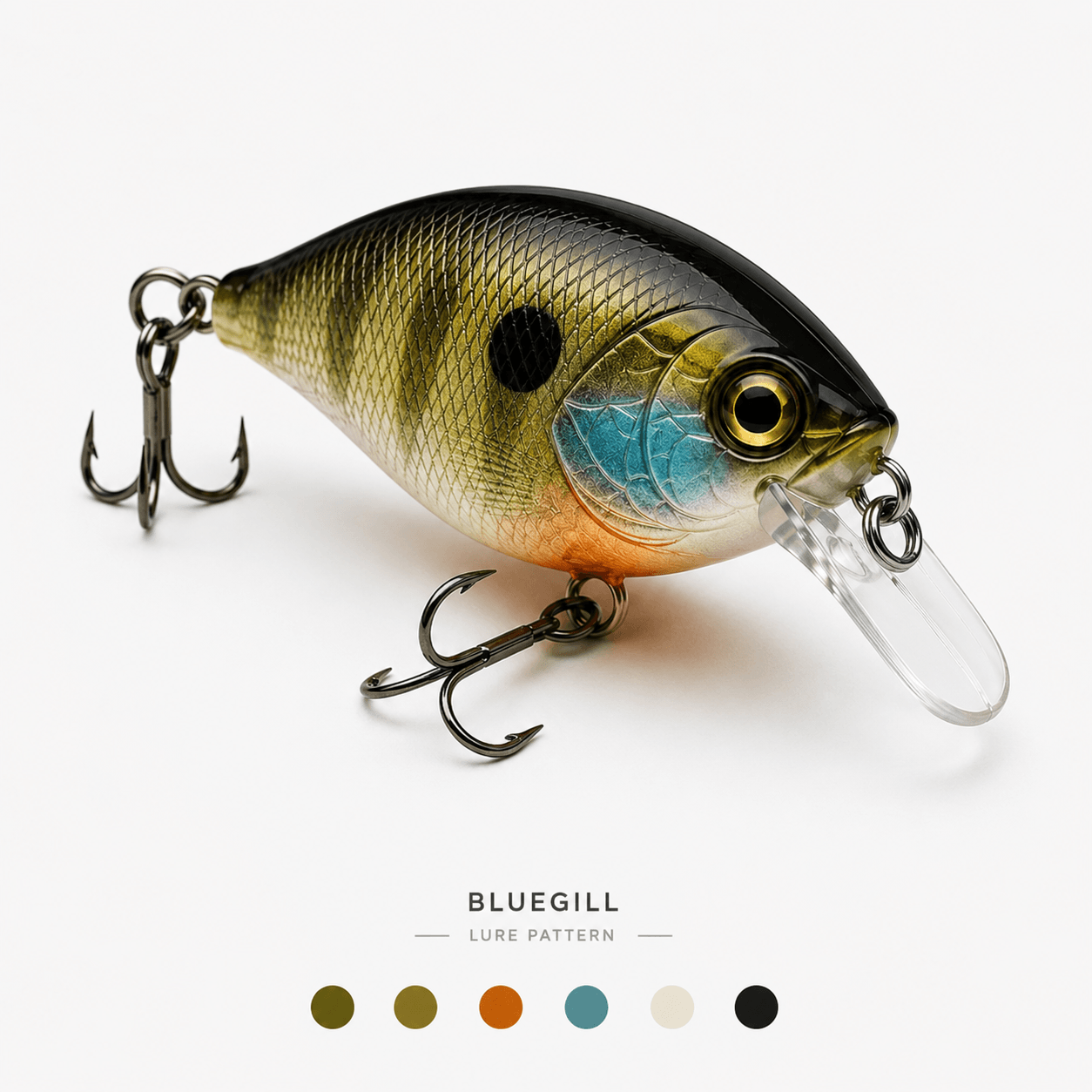
Bluegill
Bluegill Pattern imitates one of the most common freshwater prey fish. Its natural green, orange, and blue tones create a realistic profile that works especially well when bass are feeding on panfish around cover, vegetation, and shallow areas.
Target Fish
Bass, Pike, Walleye
Weather
Sunny, Cloudy, Calm
Water
Clear, Slightly Stained
Skill
Intermediate
Fishing Condition
📏 Water Depth
Shallow, Medium
👁️ Visibility
High, Medium
📅 Season
Spring, Summer, Fall
🐟 Prey Type
Bluegill, Panfish, Small Baitfish
⚡ Fish Activity
Active Feeding, Ambush Feeding, Normal
🪝 Lure Type
Crankbait, Swimbait, Soft Plastic, Jig, Creature Bait, Glide Bait
🎣 Technique
Slow Retrieve, Bottom Contact, Finesse, Cover Fishing
🔶 Pattern Purpose
Natural Mimic, Realistic Imitation, Subtle Presentation
✅ Best Use When
- Clear to lightly stained water (1–6 ft visibility)
- Spring and summer when bluegill are active
- Near grass lines, docks, and shallow cover
- When bass are feeding on panfish
- During the bluegill spawning period
- Calm or moderately sunny conditions
❌ Avoid When
- Muddy or chocolate-colored water
- Night fishing
- Heavy rain runoff conditions
- When fish are keyed on shad or baitfish schools
- Deep offshore structure (>20 ft)
- Very low-light winter conditions
Color Breakdown
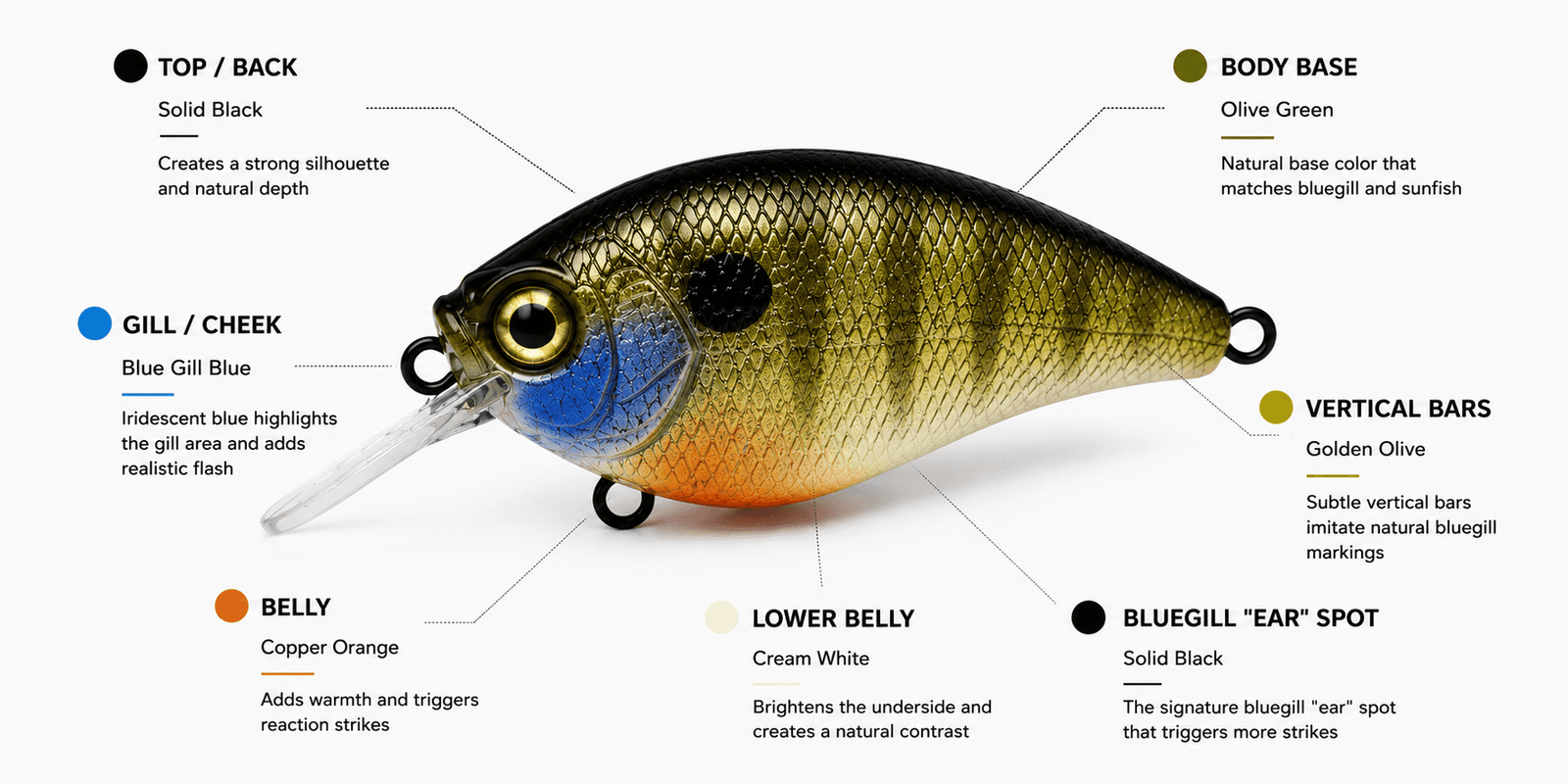
🎨 Color Palette
Olive Green
Base
Golden Olive
Highlight
Copper Orange
Blue Gill Blue
Cream White
Solid Black
Why These Colors Work
The Bluegill Pattern imitates one of the most common bass forage fish in North America. Its olive back, golden sides, blue gill accents, and black vertical bars create a highly realistic panfish profile that excels around grass, docks, and shallow cover during spring and summer.
Frequently Asked Questions
FAQ 1. When should I use a Bluegill pattern?
Bluegill patterns work best during spring and summer when bass are actively feeding on panfish. They are especially effective around docks, grass lines, lily pads, and other shallow cover where bluegill are commonly found.
FAQ 2. Is a Bluegill pattern good for clear water?
Yes. Bluegill patterns perform exceptionally well in clear to lightly stained water because their natural colors and realistic details closely match live forage, making them more convincing to cautious fish.
FAQ 3. Which fish species can be caught with a Bluegill pattern?
While primarily designed for largemouth bass, Bluegill patterns can also attract smallmouth bass, spotted bass, northern pike, muskie, and other predatory freshwater fish that feed on panfish.
FAQ 4. When is a Bluegill pattern less effective?
A Bluegill pattern is generally less effective in muddy water, at night, or when predators are feeding heavily on shad, minnows, or other baitfish. In those situations, brighter or high-contrast patterns often produce better results.
FAQ 5. What types of lures commonly use a Bluegill pattern?
Bluegill patterns are popular on swimbaits, glide baits, crankbaits, wake baits, lipless crankbaits, and hard-bodied bluegill imitators. They are most effective when retrieved at a natural, steady pace that mimics a swimming panfish.
Related Patterns