
✨Free Shipping on Orders Over $50 | Designed for Custom Lure Makers
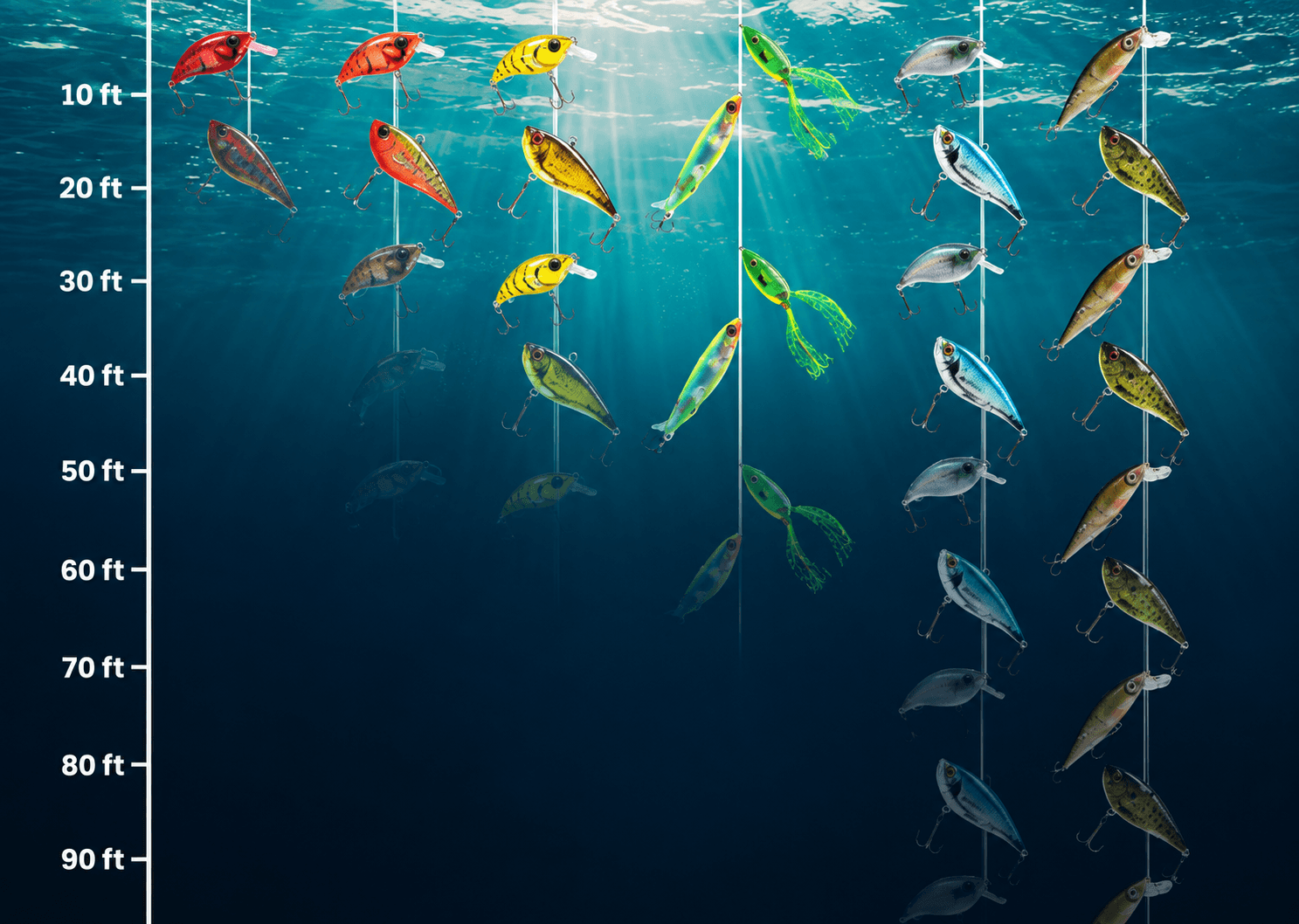
Choosing the right fishing lure color is not simply about picking the brightest color or matching whatever worked on your last trip.
The best lure color depends on several factors, including water clarity, available light, weather, season, target species, local forage, and lure type.
In clear water, a subtle and natural pattern may be a good starting point. In stained or muddy water, stronger contrast can help a lure remain visible. On bright days, reflective and natural patterns may work well, while low-light conditions can call for a darker silhouette or a more visible color.
There is no single “best” fishing lure color for every situation.
Instead, the goal is to choose a color and pattern that makes sense for the conditions you are fishing.
This guide explains how to choose lure colors using a simple, repeatable process.
Quick Lure Color Guide
If you need a starting point before heading onto the water, use the table below as a general guide.
| Fishing Condition | Lure Color Direction |
|---|---|
| Crystal Clear Water | Natural, translucent, subtle patterns |
| Clear Water | Natural baitfish and forage patterns |
| Slightly Stained Water | Natural colors with moderate contrast |
| Stained Water | Higher-contrast natural or brighter patterns |
| Muddy Water | Strong contrast, bright colors, or dark silhouettes |
| Bright Sun | Natural, reflective, or subtle patterns |
| Cloudy Conditions | Moderate to high contrast |
| Low Light | Dark silhouettes or highly visible colors |
| Baitfish Present | Match the dominant forage |
| Crawfish Present | Brown, orange, red, and darker earth tones |
| Bluegill Present | Green, olive, yellow, orange, and contrasting dark markings |
These are starting points rather than strict rules. Fish behavior, forage availability, depth, lure action, and fishing pressure can all change how effective a particular color becomes.
1. Start With Water Clarity
Water clarity is one of the most useful factors to consider when selecting a lure color.
The clearer the water, the more easily fish can often see details, color transitions, and unnatural-looking presentations. As visibility decreases, contrast and overall visibility can become more important.
Crystal Clear Water
In extremely clear water, start with natural-looking patterns that resemble the forage fish are already seeing.
Good starting colors include:
- Ghost Minnow
- Natural Shad
- Silver Black
- Ayu
- Rainbow Trout
- Natural baitfish patterns
Translucent finishes and subtle color transitions can create a more realistic appearance.
For pressured fish in clear water, an understated pattern may also provide a less aggressive presentation than an extremely bright or highly contrasting lure.
Clear Water
Clear water gives fish a relatively good view of your lure, so natural forage-based patterns are often a logical starting point.
Consider patterns based on:
- Shad
- Minnows
- Bluegill
- Perch
- Small bass
- Trout
Colors such as silver, white, gray, olive, green, and natural brown can all fit naturally into this type of environment.
The important point is not to think only about color. Consider the entire pattern.
A silver baitfish pattern, for example, may create a completely different visual profile from a solid silver lure because of its darker back, lateral contrast, or additional markings.
Slightly Stained Water
As water becomes less clear, subtle natural colors may become harder for fish to distinguish at a distance.
This is where moderate contrast can become useful.
Consider patterns that combine natural colors with stronger visual elements, such as:
- Chartreuse Shad
- Tennessee Shad
- Baby Bass
- Perch
- Golden Shiner
- Fire Tiger
You do not necessarily need to abandon natural colors. Instead, look for patterns that maintain a realistic forage profile while providing enough contrast to remain noticeable.
Stained Water
In stained water, visibility is reduced further.
A lure may need to create a stronger visual signal for fish to locate it, particularly when fishing shallow water, around cover, or in conditions with limited light.
Useful starting directions include:
- Chartreuse
- Orange
- Yellow
- Gold
- Fire Tiger
- Strong black-and-light contrast
This is also a good situation to experiment with patterns that combine multiple contrasting colors instead of relying on a single flat color.
Muddy Water
Muddy water presents a different challenge because the fish may have significantly less visual information available.
Instead of trying to create a perfectly realistic forage imitation, consider how clearly the lure will stand out against its surroundings.
Two useful approaches are:
High-Visibility Colors
Bright colors such as chartreuse, orange, and fluorescent shades can create a stronger visual presence.
Dark Silhouettes
Dark colors such as black, dark brown, or near-black can create a defined silhouette against lighter backgrounds.
Which approach performs better can depend on depth, light penetration, forage, and fish behavior.
The important idea is: In low-visibility water, think about how the fish can detect your lure—not just how the lure looks to you.
2. Consider Light and Weather
Water clarity is only part of the equation.
The amount of available light can change how a lure appears underwater. Sunlight, cloud cover, wind, rain, and the time of day can all influence the visual presentation.
Bright, Sunny Conditions
Bright sunlight can make reflective finishes and natural patterns particularly noticeable.
Good starting directions include:
- Silver
- Natural shad
- Ghost patterns
- Translucent colors
- Natural forage patterns
In clear water under bright sunlight, a subtle pattern may also help maintain a natural appearance.
Cloudy Conditions
Cloud cover reduces direct sunlight and changes the way colors and reflections appear underwater.
This can be a good time to experiment with more contrast.
Consider:
- Dark backs
- Strong two-tone patterns
- Chartreuse
- Gold
- Orange
- Black and white combinations
Rather than automatically switching to a bright lure, think about increasing the contrast between the lure and its surroundings.
Low-Light Conditions
Early morning, late evening, deep water, heavy cloud cover, and other low-light situations can reduce visibility.
Dark patterns can be useful because they can create a distinct silhouette.
Common starting choices include:
- Black
- Near Black
- Dark Brown
- Black Blue
- Dark natural patterns
Bright colors can also remain useful when visibility is limited, especially when the goal is to create a noticeable visual signal.
3. Match the Lure to the Local Forage
One of the most reliable ways to make your color selection more logical is to look at what fish are actually eating.
Instead of asking:
“What is the best lure color?”
Ask:
“What does the fish expect to see here?”
This shifts lure color selection from a generic color chart to a forage-based decision.
Shad and Other Baitfish
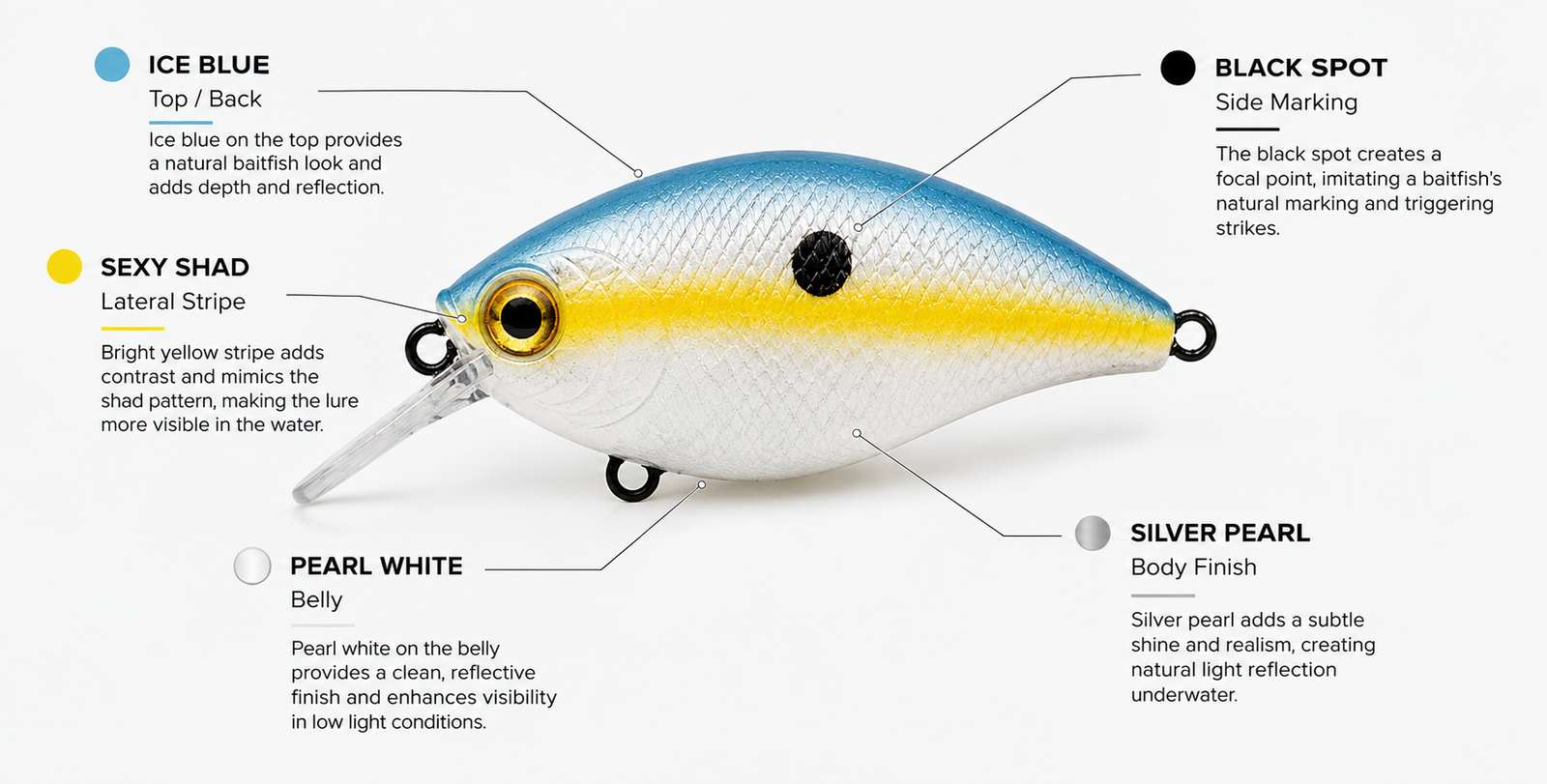
When shad or similar baitfish are an important food source, consider:
- Silver
- White
- Gray
- Blue
- Black
- Translucent finishes
Examples include:
Silver Black, Sexy Shad, Tennessee Shad, and other natural baitfish patterns.
Bluegill
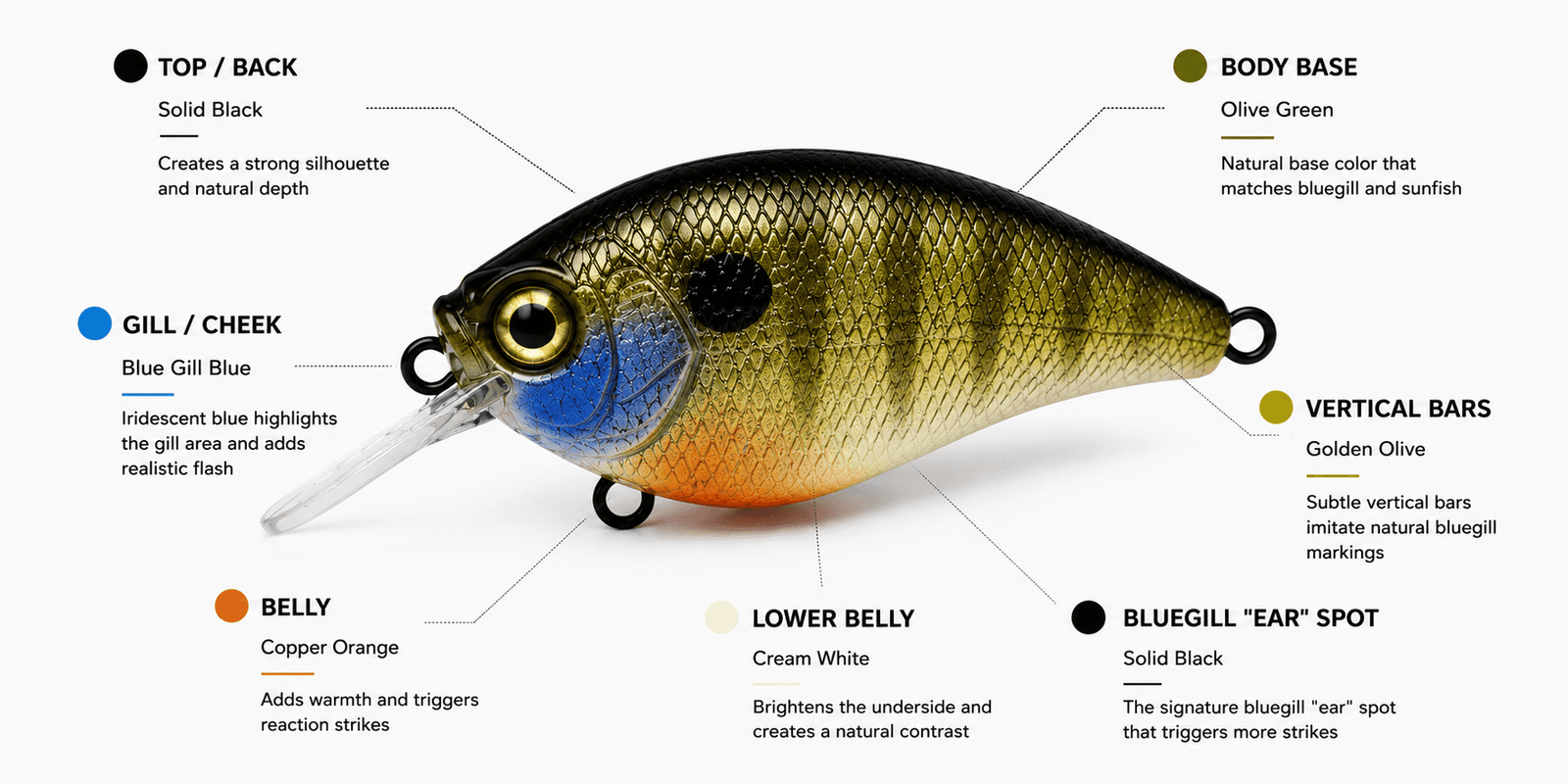
Bluegill patterns often combine several colors rather than relying on a single shade.
Common elements include:
- Olive
- Green
- Yellow
- Orange
- Blue
- Dark vertical markings
A realistic bluegill pattern can be particularly useful when fishing waters where bluegill are an important forage species.
Perch
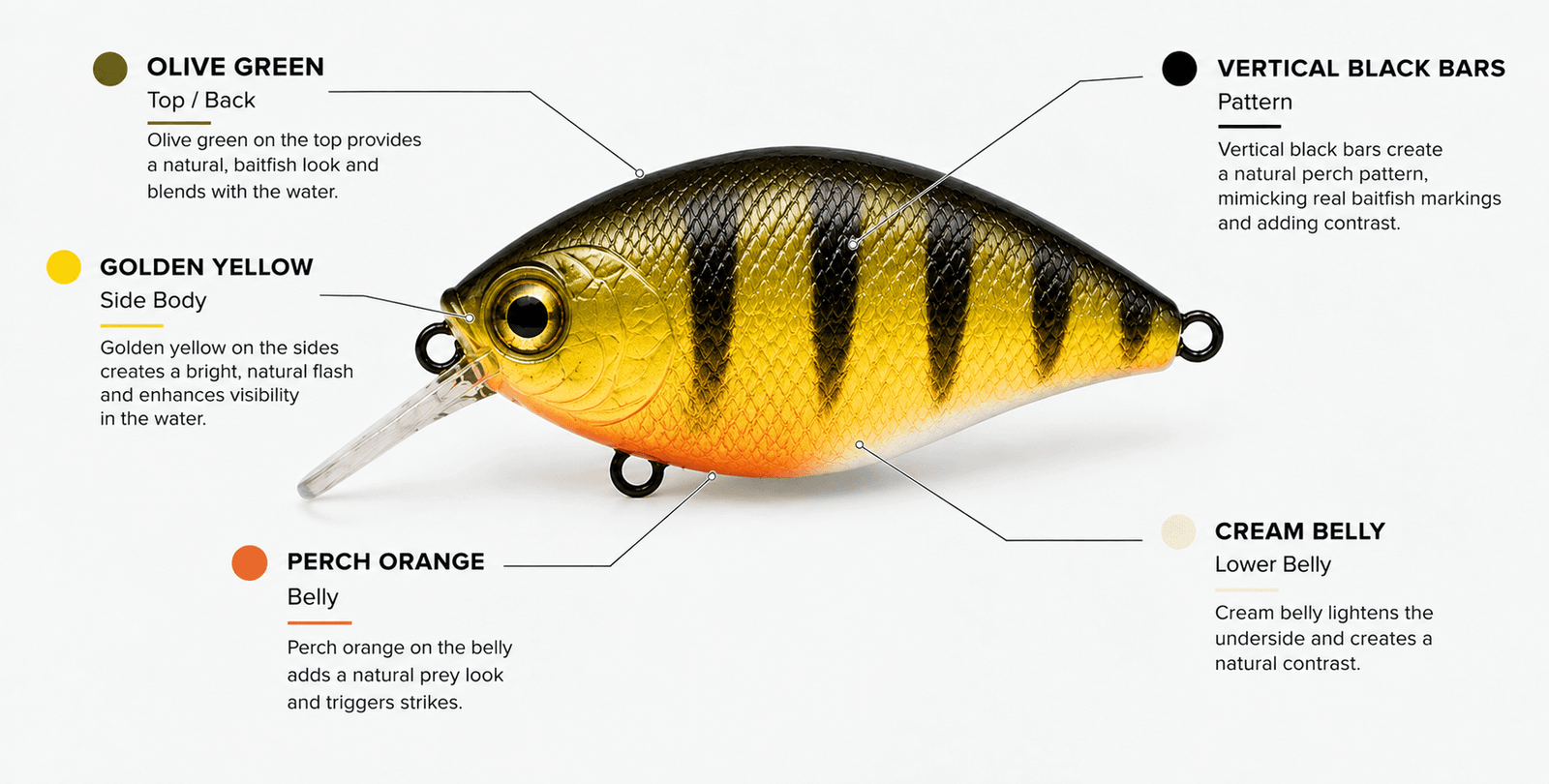
Perch-inspired patterns commonly use combinations of:
- Yellow
- Green
- Gold
- Orange
- Dark vertical markings
Rather than looking for one exact “perch color,” look for a pattern that reproduces the overall visual characteristics of the forage.
Crawfish
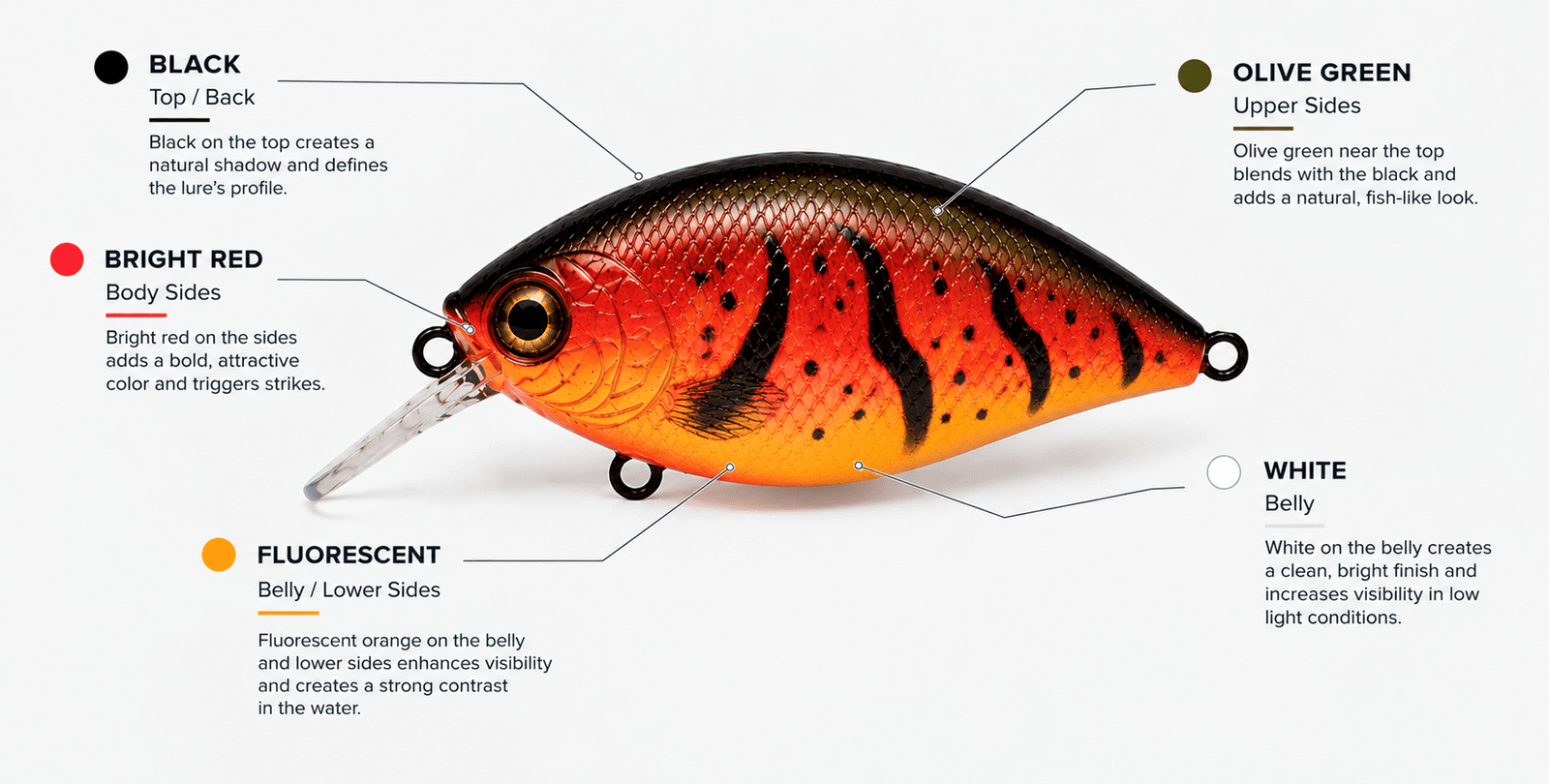
Crawfish patterns often use earth tones and warm colors, including:
- Brown
- Dark Brown
- Orange
- Red
- Black
Patterns such as Crawfish and Red Craw can provide a starting point when crawfish are an important part of the local forage.
Trout
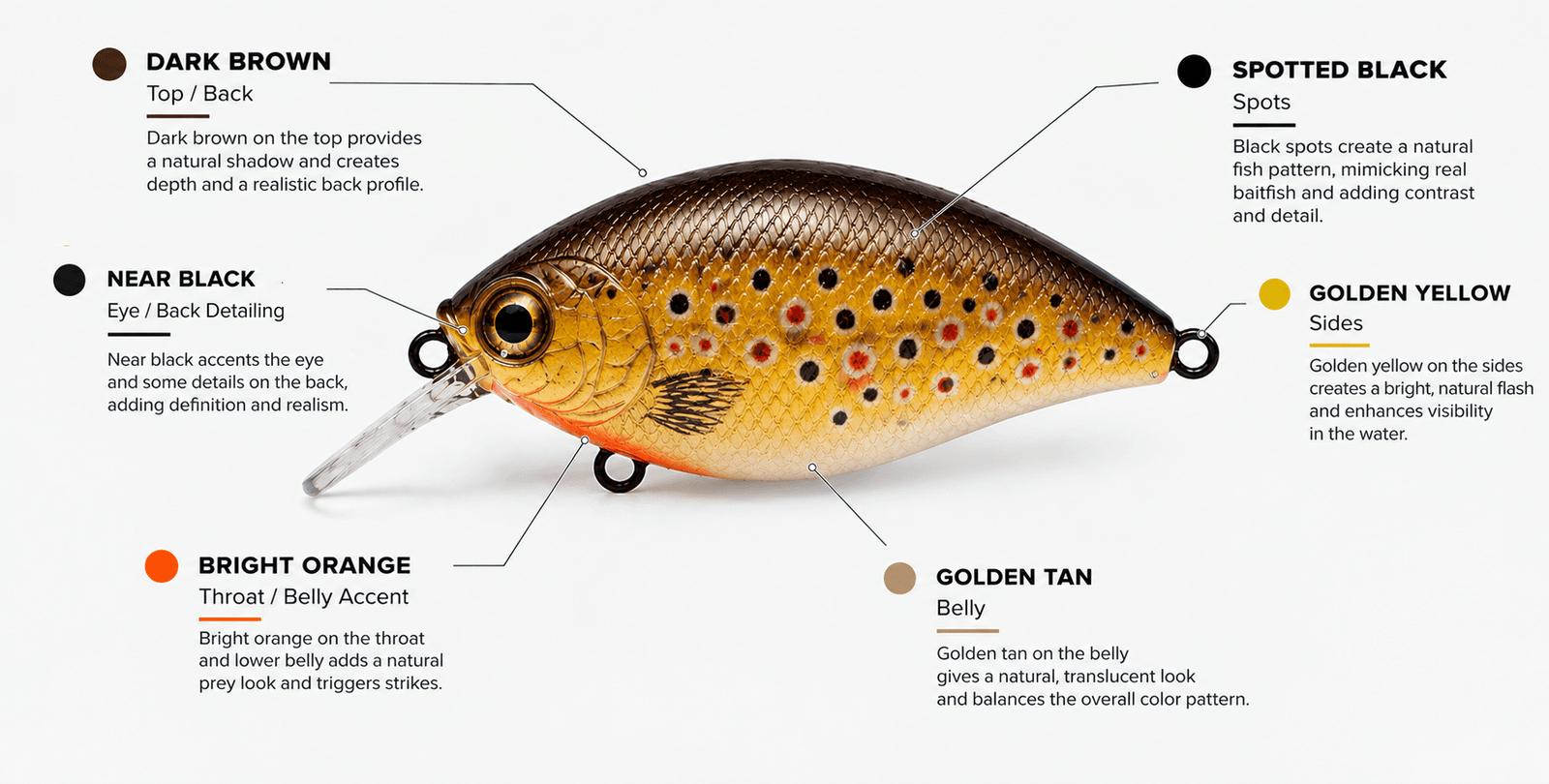
Trout-inspired patterns can include:
- Olive
- Brown
- Gold
- Orange
- Black
- Natural spotting
Natural trout patterns can be useful when targeting predators that regularly feed on trout or when a trout profile is appropriate for the fishery.
4. Think About the Target Fish
The same water conditions can produce different lure-color decisions depending on the species you are targeting.
Bass
For bass, useful pattern categories can include:
- Shad
- Bluegill
- Crawfish
- Perch
- Baby Bass
- High-contrast reaction patterns
A bass lure color choice should take both the forage and water conditions into account.
For example, a natural shad pattern may make sense when bass are feeding on baitfish in clear water, while a higher-contrast crawfish or reaction-style pattern may make more sense under different conditions.
Walleye
Walleye anglers commonly encounter situations where visibility, depth, forage, and light levels all influence lure selection.
Useful pattern directions can include:
- Perch
- Shad
- Gold
- Natural baitfish
- High-visibility patterns
In stained water or low-light situations, increasing contrast or visibility can be a useful starting point.
Pike and Musky
For larger predators such as pike and musky, lure color selection can involve both natural forage imitation and strong visual contrast.
Consider:
- Perch
- Bluegill
- Shad
- Trout
- Bright contrast patterns
- Dark natural patterns
The size and action of the lure remain important factors alongside color.
Trout
Trout fishing often benefits from paying close attention to local forage and water clarity.
Natural patterns can be particularly useful in clear water, while changes in visibility and light may justify experimenting with more noticeable colors.
Consider:
- Brown Trout
- Rainbow Trout
- Olive
- Gold
- Natural MinnowDark natural patterns
5. Don’t Ignore Lure Type
Color does not exist independently from lure design.
The same color pattern can look very different on a:
- Crankbait
- Jerkbait
- Glide Bait
- Swimbait
- Minnow
- Topwater lure
- Lipless crankbait
- Metal jig or spoon
A pattern that works visually on a long, narrow jerkbait may create a very different presentation on a compact crankbait.
This is why lure color selection should consider both what the lure imitates and how the lure moves through the water.
For example:
Jerkbaits
Baitfish-inspired patterns are often a natural starting point.
Crankbaits
Shad, crawfish, bluegill, and reaction-oriented patterns can all make sense depending on the conditions.
Glide Baits
Larger forage profiles such as trout, bluegill, or shad can influence pattern selection.
Topwater Lures
Contrast and silhouette can become particularly important because the lure is viewed from below against the surface and available light.
A Simple 3-Step Lure Color Selection Process
If you do not know what color to choose, use this three-step process.
Step 1: Check the Water
Ask:
How clear is the water?
- Crystal Clear
- Clear
- Slightly Stained
- Stained
- Muddy
Start by deciding whether you need a subtle natural presentation or a more visible, contrasting pattern.
Step 2: Check the Light
Ask:
How much light is available?
Consider:
- Bright sun
- Cloud cover
- Wind
- Rain
- Early morning
- Late evening
- Depth
This helps determine whether you should emphasize natural detail, reflection, contrast, or silhouette.
Step 3: Identify the Forage
Ask:
What are the fish likely to be feeding on?
Look for:
- Shad
- Minnows
- Bluegill
- Perch
- Crawfish
- Trout
- Other local forage
Then choose a lure pattern that combines the appropriate forage profile with the current visibility conditions.
7. Natural vs. Bright Lure Colors
One of the most common questions anglers ask is whether natural or bright colors are better.
The answer depends on the conditions.
Natural Colors
Natural patterns can be a logical starting point when:
- Water is clear
- Fish can see the lure easily
- Matching local forage is important
- The environment contains abundant natural prey
- You want a subtle presentation
Examples include:
Ghost Minnow, Ayu, Rainbow Trout, Baby Bass, Silver Black
Bright Colors
Brighter patterns can be useful when:
- Water visibility is reduced
- You need additional visual presence
- The environment provides low contrast
- You are intentionally creating a reaction-oriented presentation
Examples include:
Fire Tiger, Chartreuse Shad, Bright Orange, Fluorescent colors
Dark Colors
Dark patterns can create a strong silhouette, particularly when visibility is limited.
Examples include:
Black, Black Blue, Dark Brown, Near Black
The important distinction is that bright does not automatically mean better, and natural does not automatically mean better.
The conditions determine the starting point.
8. Use Contrast, Not Just Color
When selecting a lure, anglers often focus on individual colors.
But fish do not necessarily perceive a lure as a list of paint colors.
The overall visual pattern matters.
For example:
Black + White
creates strong contrast.
Dark Green + Olive
creates a much more subtle transition.
Silver + Black
can create a natural baitfish profile while maintaining contrast.
Orange + Brown
can create a crawfish-inspired appearance.
This is why two lures containing the same basic colors can look completely different underwater.
When visibility is poor, think about contrast, silhouette, and overall pattern, not just the color name on the package.
9. Lure Color Selection Is a Starting Point, Not a Rule
Fishing is not a controlled laboratory experiment.
A color that works extremely well one day may produce very different results under different conditions.
Fish can change their behavior because of:
- Forage availability
- Water temperature
- Fishing pressure
- Depth
- Current
- Season
- Fish activity
- Lure presentation
- Retrieve speed
For that reason, use color recommendations as a starting point rather than a rigid formula.
Start with the pattern that best matches the conditions, then adjust based on what you observe on the water.
If natural colors are not producing, increase contrast.
If a bright pattern is getting ignored in clear water, try something more subtle.
The goal is to make controlled adjustments rather than randomly changing colors.
10. Find the Right Lure Pattern for Your Conditions
Choosing a color is only the first step.
The next question is:
Which actual lure pattern should you use?
That’s where the LureColor Pattern Library can help.
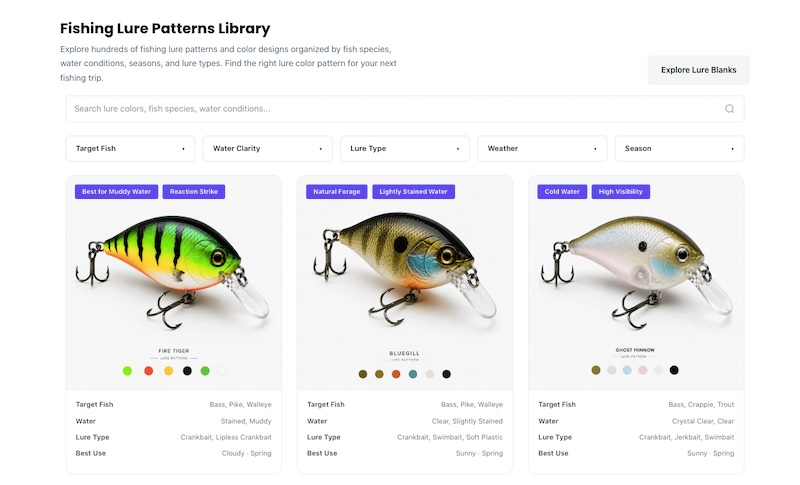
You can explore lure patterns based on factors such as:
- Target fish
- Water clarity
- Weather
- Season
- Lure type
- Pattern characteristics
Instead of browsing hundreds of lure colors randomly, start with the conditions you are actually facing and narrow your options from there.
Explore the LureColor Pattern Library
Find lure patterns based on fish species, water conditions, weather, season, and lure type.
[Explore the Pattern Library]
11. From Pattern to Lure Blank
If you make your own fishing lures, choosing a pattern is only part of the process.
Once you know what type of color and pattern you want to create, you can choose a suitable lure blank and build the lure around your selected design.
Ready to Create Your Own Fishing Lure?
Start your custom lure project with premium unpainted lure blanks designed for painting, customization, and lure making.
Lure blanks provide the basic shape and structure of the lure before painting and finishing.
Depending on the presentation you want to create, you can start with different lure styles, including:
- Crankbait blanks
- Jerkbait blanks
- Glide bait blanks
- Swimbait blanks
- Minnow blanks
- Lipless crankbait blanks
- Topwater blanks
- Metal jig and spoon blanks
This creates a simple workflow:
Choose the conditions → Find a pattern → Choose a lure type → Select a blank → Paint your lure
For lure makers, this turns color selection into part of the entire lure-building process.
Frequently Asked Questions
What is the best fishing lure color?
There is no single best fishing lure color for every situation. The right starting color depends on water clarity, available light, weather, forage, target species, and lure type.
What color lure should I use in clear water?
Natural and subtle patterns are a useful starting point in clear water. Consider baitfish-inspired patterns such as Ghost Minnow, Shad, Ayu, or other natural forage patterns.
What color lure works best in muddy water?
In muddy water, consider colors and patterns that create strong visual contrast or visibility. Bright colors such as chartreuse and orange, as well as dark silhouettes such as black or near-black, can be useful starting points.
What color lure should I use on a cloudy day?
Cloudy conditions can reduce direct sunlight and change the appearance of a lure underwater. Consider patterns with moderate to strong contrast, including dark backs, chartreuse, gold, orange, or other contrasting combinations.
Should I match the hatch when choosing a lure color?
Matching local forage can be an effective starting strategy, especially when fish are actively feeding on a recognizable prey species. However, water clarity, light, depth, and lure presentation should also be considered.
Are bright lure colors better than natural colors?
Neither is universally better. Natural colors can be useful when visibility is good and forage imitation is important, while brighter or higher-contrast patterns can provide more visual presence when visibility is reduced.
Does lure type affect color selection?
Yes. The same color pattern can look very different depending on the shape, size, action, and depth of a lure. Color selection should therefore be considered together with lure type and presentation.
Final Takeaway
Choosing a fishing lure color does not have to be a guessing game.
Start with the conditions:
Water clarity → Light → Forage → Target fish → Lure type
Then choose a pattern that fits those conditions.
When conditions change, adjust the color rather than assuming one pattern will always work.
The best lure color is not necessarily the brightest, darkest, or most realistic color.
It is the color and pattern that makes sense for where, when, and how you are fishing.